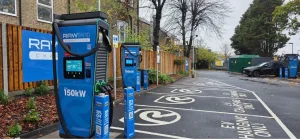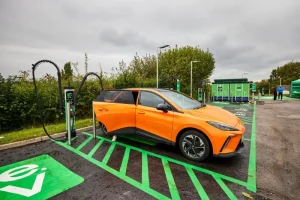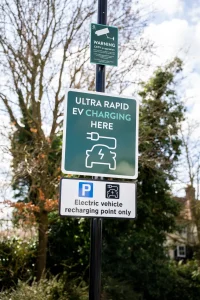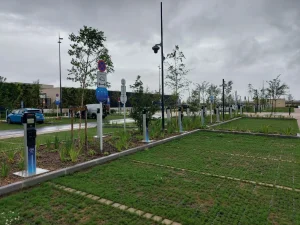
Across the UK, EV charging sites are being vandalised and cables are being cut, leaving customers stranded, damaged public trust in infrastructure and downtime for CPOs.
Your vandalism protection needs to address the equipment, the surrounding space and what happens when someone reports damage. Cable sleeves, cameras and lighting each do a different job. Your plan needs to connect them.
For your drivers, the problem is immediate. Can they reach a working charger, use it safely and get help if something is wrong? For your team, one incident can mean several unavailable bays, repair visits and time diverted from the next site opening.
Start with the damage your sites face, then choose measures that address it. This guide explains what to check before you specify protection or expand it across your network.
What Should an EV Charger Vandalism Protection Plan Cover?
Cover deliberate damage, cable theft, detection and recovery. Assess vehicle impacts alongside them, because accidental damage needs different protection.
Buying every available security product can leave gaps if nobody has checked how the site works.
Energy Saving Trust’s February 2026 guidance on charger vandalism recommends considering location, lighting, CCTV, forensic marking and coordination with local partners.
The practical starting point is a site review, including a visit after dark. A daytime drawing will not show every lighting or camera problem.
Why Can One Incident Disrupt Several Charging Bays?
The impact depends on the equipment damaged and the capacity taken out of service, not simply the number of stolen cables.
If several chargers are affected, drivers may arrive at a location with little usable capacity. Your team then has to manage repairs and customer information at the same time.
Track four consequences:
- Unavailable capacity: Which charging positions are affected, and which can remain
safely operational? - Recovery work: What parts, engineer visits and testing are needed?
- Driver information: Do your app, support team and site notices reflect the actual
availability? - Repeat exposure: Has the same location been damaged before, and what changed
afterwards?
Our EV cable theft cost guide and calculator explains how to separate repair costs from downtime losses. Use your own incident figures when assessing security spend.
How Does CableGuard Help Protect EV Charging Cables?
A Formula Space designed solution. CableGuard™ is a patent-pending, cut-resistant sleeve that takes 25x longer to cut than an unprotected cable, while spraying the suspect with forensically traceable liquid with a unique DNA code linked to that site.
The technology behind the tracing system shows a 98% drop in repeat attacks when implemented and a 100% conviction record when used as evidence in UK courts.
Its role within your site plan is to provide:
- Physical resistance: A sleeve designed to increase the difficulty of cutting the cable.
- Optional traceability: Forensic marking that can help link contaminated items or
suspects to a location. - Retrofit protection: A system designed for fitting to existing cables, subject to
compatibility and application requirements.
Additional measures to create a layered security system
While CableGuard™ shields the charging cable itself, each site still needs to have implemented a holistic security plan to safeguard uptime, protect infrastructure and maintain user confidence. No single product can do it all but a carefully blended, multi-layer solution, ideally coordinated by a single-source, gives your location the strongest defence from day one.
Active CCTV Monitoring
Studies of car‑park settings show an average 37 % crime drop where cameras are installed and a system actively watched saw a further 15% reduction.
Audio talk‑down and strobe lighting stops many incidents before any damage is done.
Integrate it with automatic number‑plate recognition for bulletproof evidence packages and potential added revenue streams.
Smart ECO Lighting
Large‑scale reviews conducted by the College of Policing link improved lighting to a 21% reduction in overall crime. It was also noted CCTV effectiveness is improved in reducing crime when adequate lighting is implemented.
Motion‑adaptive towers slash energy use while flooding bays with 5 000 K light whenever movement is detected.
Eco lighting towers can be installed with completely self-sustaining systems boasting guaranteed uptime in the UK from entirely sustainable sources with no grid link-up required.
Signage & Crash Protection
Installing all protections available are only effective if they are known to potential attackers. Warning signage of monitored CCTV being in operation, ANPR and forensic tracking only provide a strong deterrent if boldly advertised.
Crash‑rated bollards and bump-stops protect chargers, branding and furniture from the daily risks of operating a vehicle charging location.
Clear line‑of‑sight from the street puts attackers in public view, gaining additional marketing points too.
How To Turn Separate Security Measures Into a Working Plan
Give every measure an owner and test the response before you need it.
A site can have cameras, lighting and protective sleeves while still leaving everyone uncertain about who responds at night.
Use a short operational review:
- Record the problem: Map incidents, damage and downtime by location.
- Agree responsibilities: Identify the operator, site host, monitoring provider and electrical service partner contacts.
- Test the alert chain: Confirm that a controlled test reaches the right person and that escalation works.
- Check the evidence process: Make sure authorised staff can retrieve relevant footage and incident records.
- Plan recovery: Agree how damaged equipment is assessed, availability information is updated and repairs are arranged.
- Review performance: Track repeat incidents, alert handling, usable footage and return-to-service time.
After damage, keep people away from affected equipment and involve a competent electrical service partner. Do not ask site staff to handle cut cables or repair chargers
Our EV infrastructure advisory service helps you consider supporting infrastructure within the wider site plan. Formula Space does not install EV chargers or carry out their electrical repairs
EV charger crime has more than quadrupled in two years
Reported crimes involving EV chargers and charging cables, 2023–2025.
Combined totals for West Mercia, Leicestershire and Nottinghamshire police, the forces that publish year-by-year figures. Includes cable theft, criminal damage and unauthorised use of electricity. Source: police Freedom of Information responses via Northgate Vehicle Hire (2026).
Discuss the Gaps in Your Charging Site Protection
Bring us the sites where damage, poor visibility or repeated cable theft is creating work for your team.
Share site plans, photographs, charger models, incident records and your existing security arrangements. We can discuss CableGuard, lighting, signage and protective infrastructure around the risks you need to address.
A CableGuard demonstration can help your technical team assess fit and handling before a wider rollout.
For more information about Formula Space’s cable theft protection solutions, visit https://formula-space.com
Sources
- EV Charging Statistics – ZapMaps
- EV charge point vandalism and theft doubles in 2024 – Transport & Energy
- Crime Reduction Toolkit – Street Lighting – College of Policing
Formula Space designs and delivers EV charging infrastructure for operators, local authorities, and developers across the UK. We work with clients to make their sites identifiable, recognisable, and ready to scale. If a network rollout is on your roadmap and visual identity is part of the conversation, get in touch.