Public charging still grades itself on uptime. The operators winning drivers are measuring something harder, and building the experience to match.
Ask a charge point operator how its network is performing and the answer usually comes back as an uptime figure. Availability of 99% or more reads well in a board report and satisfies the regulator. It also skips past the thing that matters most to the person standing at the charger, which is whether they managed to charge at all.
Uptime versus first-time charge success
In the UK, rapid networks are now held to a 99% reliability standard, so uptime has become the number everyone points to. On one assessment, under 4% of operators currently meet it. The bar is high, and clearing it still does not guarantee the experience drivers actually get.
The gap between the two is wider than most of the industry admits. ChargerHelp studied more than 100,000 charging sessions across 2,400 chargers this year and found a first-time success rate of 71%, even though the same chargers reported uptime between 98.7% and 99.9%. More than a third of those failures happened on equipment that looked completely healthy.
Driver surveys tell the same story from the other side. J.D. Power’s 2025 study found that 14% of drivers who pulled up to a public charger left without charging. The figure is improving, down from 19% the year before, but it shows how often a working network still fails the person in front of it.
Uptime measures whether the equipment is switched on. Drivers are asking whether they can charge, and that is a harder number to hit.
Why EV charging sessions fail: hardware, apps and payments
When a charge does not happen, the cause is rarely one thing. Some failures are hardware. More often it is a payment step that will not complete, an app that asks too much of a first-time visitor, or two systems that do not talk to each other cleanly.
Payments are their own knot. Many drivers manage 5 or more separate network accounts, each with its own pricing and its own app, and attitudes toward that sprawl run negative by around 5 to one. When a payment fails at an unattended site, there is often no fallback and no one to ask, so the driver simply leaves.
This is what a young market looks like while its standards catch up with its growth. The friction is spread across the chain rather than sitting with any one company, and so is the chance to remove it.
How charge point operators improve reliability
Here is where the charge point operator matters more than any other party. It sits between the driver, the hardware manufacturer and the payment provider, and it is the only one with a view of all three at once. When a charge fails, the operator is the one who can see why and get it to the right partner to fix.
That starts with better measurement. First-time success rate, recorded session by session, tells an operator far more than an availability percentage ever will. Knowing which charges did not start, and why, turns a vague sense of reliability into a list a team can work through. The operators treating reliability as something to measure and manage, rather than a number to report, are pulling ahead.
Site design and the first-time driver experience
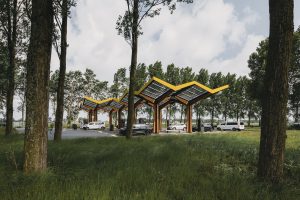
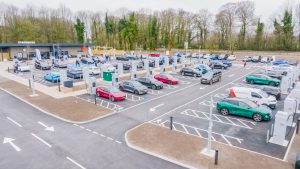
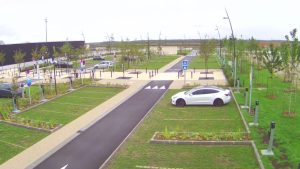
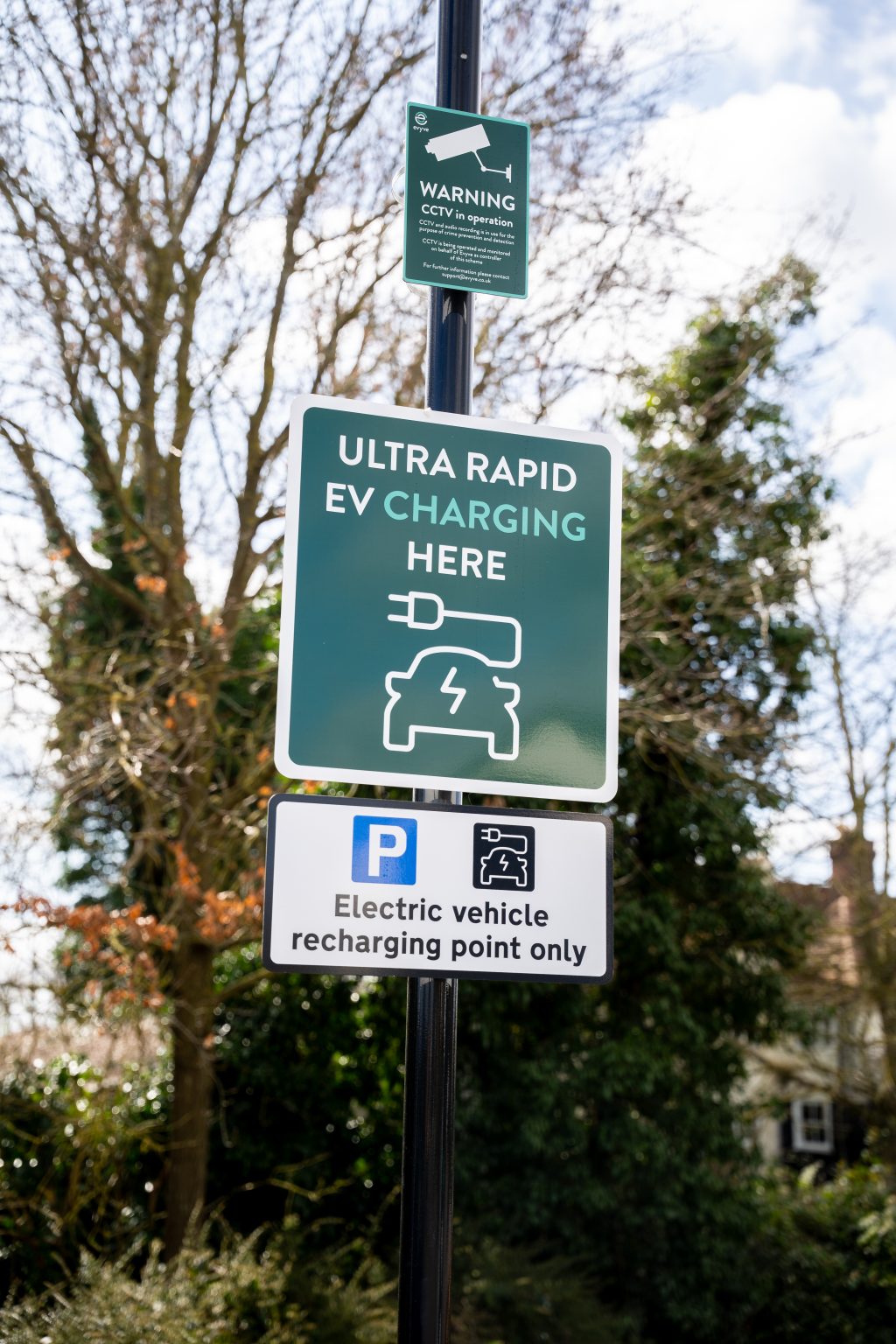
Coordination behind the screen only takes the experience so far. The site in front of the driver carries the other half. A driver arriving for the first time should understand what to do without hunting for it, and good design at the point of use decides whether that driver charges or gives up.
How Formula Space protects uptime and improves the charging experience
Two things decide whether that utilisation number holds. The charger has to stay available, and it has to be easy to use which is why we build for both, embedding user experience into the very start of the life-cycle of a new site.
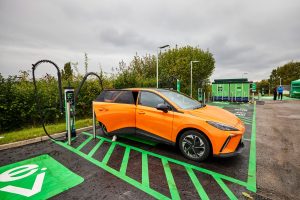
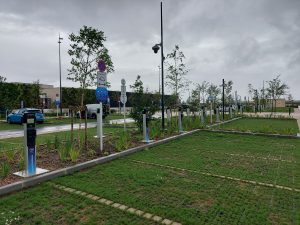
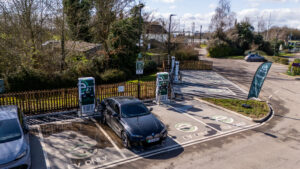
Availability is a minimum for drivers, and a less brand damaging one, they don’t blame the brand if all chargers are busy, but they will if the charge fails, or a charger is down altogether. The risks that hurt most are the ones that take a charger out for days. CableGuard® protects against EV cable theft, where a stolen cable turns a working charger into a dead bay and a run of lost sessions. Crash protection shields the chargers and their cabling from vehicle strikes, one of the more common ways a bay is lost on a busy forecourt. Every reliability figure sits on top of that.
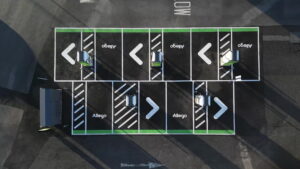
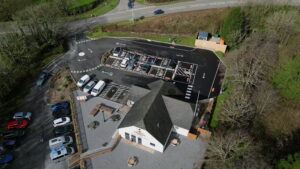
Experience is where the design work earns its keep. The flow a driver moves through, the wayfinding, the colour, the font sizing on the instructions and the drivability of the layout all decide whether a first-time visitor charges without stress or walks away. This is the part of a site that much of the market still treats as an afterthought, and the part we design first.
Reliability, driver trust and utilisation
Get both right, the site that stays live and the site that is easy to use, and drivers come back. People remember where charging went smoothly, and they return to the networks that do not make them think. As the market matures, utilisation will gather around the operators who hold the whole experience together.
That is the standard Formula Space builds to. We design, develop and own what we deliver, so protection and experience are decided together from the first drawing rather than bolted on once the concrete is poured. The networks that understand this early will own the habit. The rest will keep reporting healthy uptime and wondering why the cars drive past.
Sources
- ChargerHelp, Charge Success Rate report (September 2025). https://www.chargerhelp.com/post/news-and-events/chargerhelp-report-reveals-charge-success-rate-and-not-uptime-more-accurate-metric-for-ev-driver-experience/
- J.D. Power, 2025 US Electric Vehicle Experience Public Charging Study. https://markets.financialcontent.com/dowtheoryletters/article/bizwire-2025-8-13-fewer-failed-charging-attempts-signal-progress-in-ev-infrastructure-jd-power-finds
- Electronic Payments International, The charging experience is broken and payments are at the heart of the problem. https://www.electronicpaymentsinternational.com/comment/charging-experience-broken-payments-heart-of-problem/
- Zest, EV Charging Reliability in 2026: What the Data Really Shows. https://www.zest.uk.com/news/ev-charging-reliability-in-2026-what-the-data-really-shows
Formula Space designs and delivers EV charging infrastructure for operators, local authorities, and developers across the UK. We work with clients to make their sites identifiable, recognisable, and ready to scale. If a network rollout is on your roadmap and visual identity is part of the conversation, get in touch.